
Take a New Look at Induction Cooking
Anyone who has traveled to Europe knows that induction cooking is more prevalent there than in the United States. The energy efficiency and reduced carbon footprint of induction cooking over gas has long been a sought-after feature for European foodservice operators. Now, those same concerns are surfacing more in the United States as well, with New York becoming the first state to ban gas in new construction starting in 2026.
At Boelter, we’ve found it doesn’t take regulations to encourage change. Many foodservice operators are already looking for ways to be more environmentally friendly, and induction cooktops are a good option, as they cook with 90% more efficiency than their gas counterparts. Induction cooktops use electromagnetic energy to create heat directly in the pan, which means there isn’t heat escaping out into the kitchen. This not only makes for a more comfortable environment for staff, it also lessens the load for the HVAC systems.
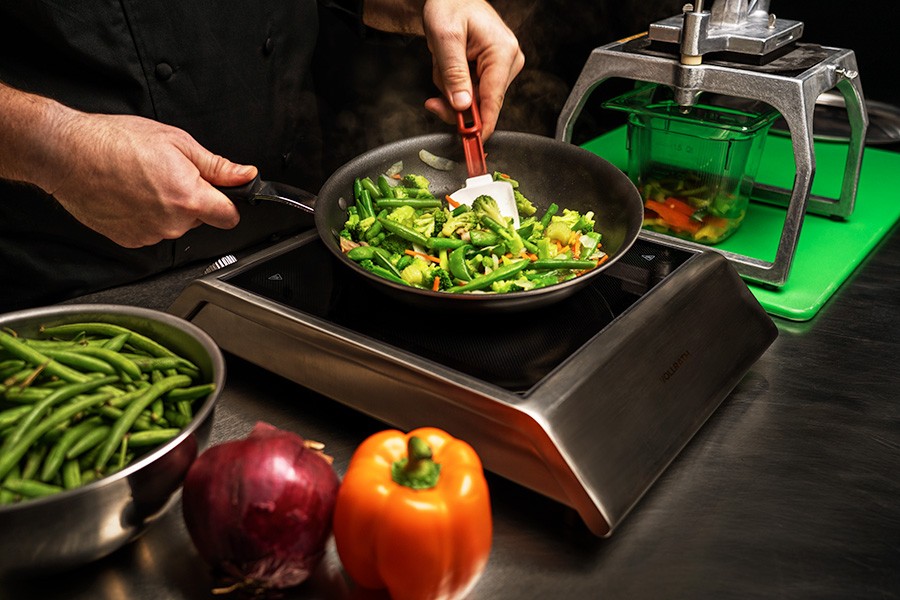
The S.A.F.E. Benefits of Induction Cooking
Energy efficiency isn’t the only advantage induction cooking has over gas. Operators who have made the switch to induction are finding increased productivity and consistency in results due to a number of factors.
-
Safe: No open flame means less risk of fire, fewer burns, and cooler working conditions. Small article detection also helps prevent accidents when non-cookware items are left on the burner.
-
Accurate: Precise temperature control lets you dial in exact heat levels and maintain them consistently—ideal for delicate sauces, proteins, and high-volume prep.
-
Fast: Get to temp quickly and stay there. Induction heats cookware directly, meaning no warm-up or recovery time. This also means cookware cools down quickly once it's removed from heat, since there's no residual ambient heat.
-
Efficient: Up to 90% of the energy used goes directly into the pan (vs. about 45% for gas), which saves energy and lowers utility costs.
Because induction cooking produces no ambient heat or flames, it often doesn’t require a ventilation hood, especially for light-duty applications. That means more flexibility for where you can place your equipment, whether you're adding a pop-up station, retrofitting a space, or building out a new kitchen on a tighter budget. Before considering more medium- or heavy-duty applications for induction, it's important to check with your local regulators to see what kind of ventilation hood would be required for your needs.
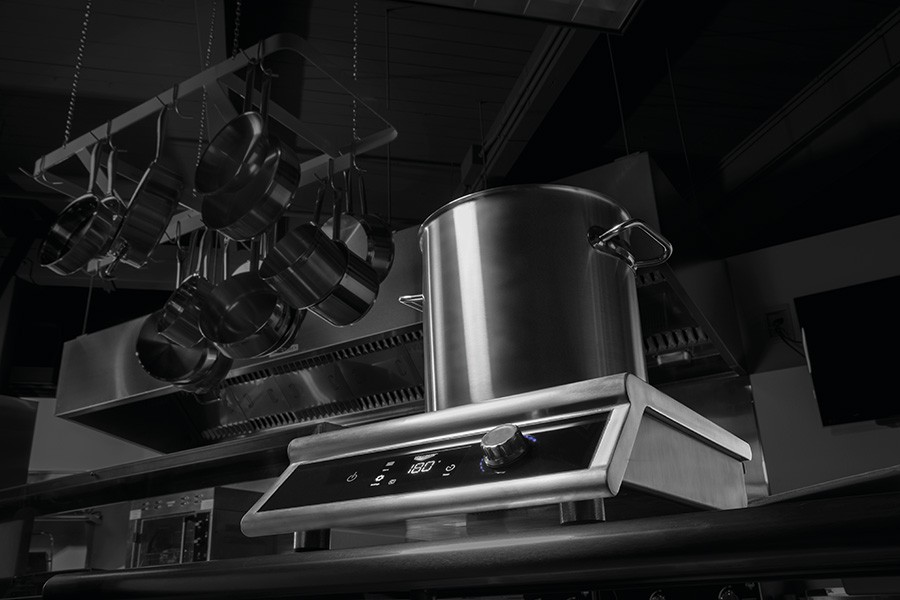
New Technologies Improve the Induction Experience
Vollrath, a leader in induction cooking for more than 20 years, constantly listens to operators and looks for ways to improve equipment to make a better cooking experience for the end user. With the new 4-Series induction technology from Vollrath, an expanded magnetic field allows operators to tip the pan and even lift it slightly off the burner and the induction cooktop will not break the connection. They also offer a varied lineup of countertop induction ranges to match different cooking needs and budgets—whether you’re setting up a compact front-of-house station or outfitting a high-performance back-of-house line.
The Mirage® Cadet is a lightweight, entry-level model designed for light-duty applications like buffets, catering setups, and cooking demos. With simple push-button controls, reliable performance, and energy efficiency that far outpaces gas, it’s a great fit for operators just getting started with induction.
The Mirage® Pro adds more power, durability, and control, making it a strong choice for medium-duty cooking. Its digital interface and durable ceramic top give operators the precision and resilience they need for everyday use in a variety of settings.
At the top of the line, the 4-Series delivers industry-leading temperature accuracy and gas-like responsiveness, even when lifting or tilting the pan. Available in multiple wattages with either touch or knob controls, it’s a versatile, high-performance solution for kitchens that demand consistent results and flexible control.
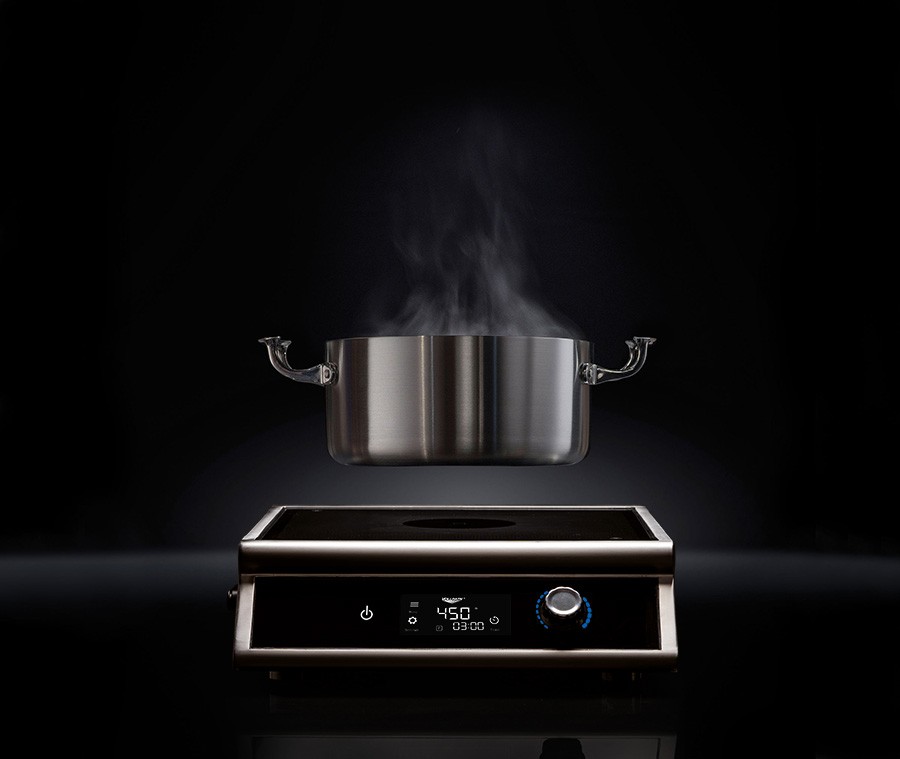
Vollrath also offers flexibility when it comes to energy use. “The days of having a huge element heating a small pan are over,” says Rich Rupp, corporate product training manager, Vollrath. “We want to give operators the most efficient product, which in some cases means designing products such as our soup warmers and buffet warmers with a lower amp draw.”
With induction units being more energy efficient compared to traditional gas ranges, some units from Vollrath qualify for energy rebates. While eligibility can vary based on state and utility providers, it can still be beneficial to check with your local officials to explore potential incentives for switching to energy-efficient equipment.
Bringing Induction Into Your Kitchen
With more models available and new innovations leading the way, induction is no longer just a niche solution. It’s a practical, high-performance option for a wide range of foodservice operations. Whether you're looking to improve energy efficiency, reduce your carbon footprint, or simply create a cooler, more comfortable kitchen environment, induction cooking checks all the boxes.
Ready to make the switch? Contact us today to learn more about how to select the right induction cooking solutions for your kitchen.