
Keeping Food Fresher, Longer: Preservation Tips for School Kitchens
In school kitchens, food preservation isn’t just about avoiding waste—it’s essential to keeping operations running smoothly every day. With limited storage space, tight budgets, and strict meal schedules, school foodservice teams need reliable preservation techniques to extend the life of their ingredients.
“In our current vigilance on sustainability, food preservation makes sense,” says Jeanine Lopez, Boelter’s Director of Education. “It helps reduce waste while minimizing environmental impact.” Beyond sustainability, effective food preservation techniques support better nutrition for students, reduce supply chain pressures, and help schools maximize their food budgets over time.
Here’s a closer look at effective food preservation techniques for school kitchens today, along with solutions designed to support long-term success.
1. Walk-In Refrigeration: For Daily Use Items
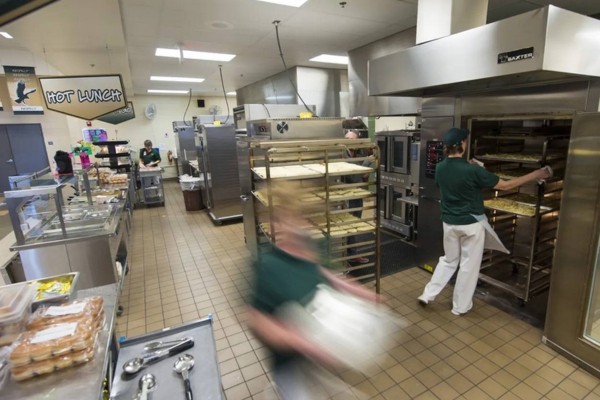
Walk-in refrigeration is the heart of any school kitchen, keeping daily-use items like milk, fresh produce, and prepped ingredients at safe temperatures. Because these spaces are accessed constantly throughout the day, keeping them organized is essential for tracking inventory, reducing food waste in school kitchens, and saving valuable prep time. With the right shelving setup, you can maximize space and get quick, at-a-glance visibility into what’s in stock.
Our Top Pick: MetroMax® Q Shelving
Built for the tough demands of school kitchens, MetroMax® Q shelves resist corrosion and withstand temperatures from -20°F to 125°F. They are also dishwasher-safe, making cleaning more efficient and helping maintain food safety standards.
2. Freezing: For Long-Term Storage of Perishables
Freezing extends the shelf life of food in schools, such as proteins, baked goods, and other perishables that aren’t used daily. It’s an ideal method for storing frozen meal components, bulk items, and batch-prepped ingredients intended for use over several weeks or months.
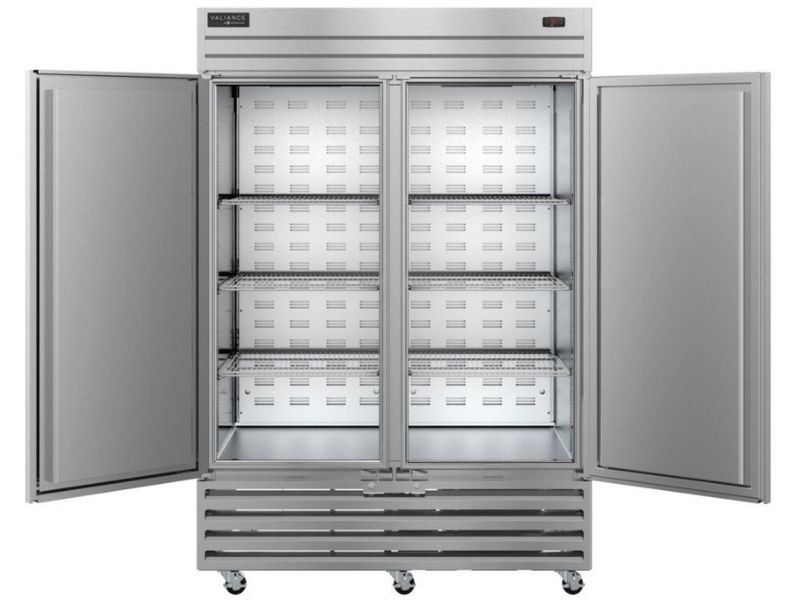
Our Top Pick: Hoshizaki VF2A-FS Valiance Freezer
This two-door reach-in freezer features durable stainless-steel construction and lockable, self-closing doors that help maintain a consistent internal temperature. Maintaining this temperature is key to preserving freshness and reducing food waste in school kitchens.
3. Blast Chilling: For Holding Pre-Cooked Food Safely
Blast chillers allow school kitchens to cook in advance without compromising food safety. They rapidly cool hot food to safe holding temperatures, preventing bacterial growth and enabling staff to prep meals ahead of time.
“Utilizing equipment like blast chillers reduces food temperature much quicker than putting product in a freezer,” says Lopez. “When you reduce a food’s temperature quickly, it helps to maintain the moisture level in the food, thus maintaining the quality, texture and flavor of the product.”
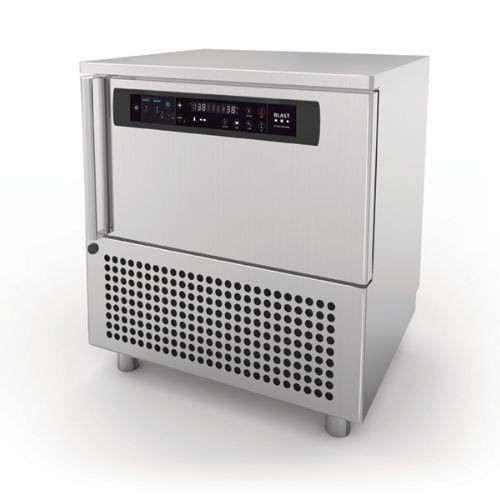
Our Top Pick: Delfield CV5E Blast Chiller/Shock Freezer
This versatile unit chills up to 44 pounds or shock freezes 27 pounds of food. It’s a great tactic for preventing food spoilage in school kitchens as staff can preserve batch-cooked meals or quickly freeze perishables like berries and vegetables.
4. Vacuum Sealing: For Extended Freshness
Vacuum sealing is a simple yet powerful food preservation technique for school kitchens to extend the life of meats, cheeses, produce, and prepared meals. By removing air from packaging, it slows spoilage and protects food during refrigerated or frozen storage.
Our Top Pick: Vollrath VP12 Vacuum Pack Machine
Compact and versatile, this in-chamber sealer preserves a variety of food types and frees up valuable countertop space—perfect for busy school kitchens who need the extra prep space throughout the day.
5. Dehydration & Dry Storage: For Shelf-Stable Ingredients
Dehydrating food is a great way to prevent food spoilage in school kitchens as it removes moisture from the product for long-term storage, while supporting creative menu planning. It’s also an effective way to preserve seasonal produce or prepare ingredients for soups, sauces, snacks, and more.
Our Top Pick: Waring WDH10 Dehydrator
This compact unit features five stackable trays for drying fruits, vegetables, herbs—even meats. It supports up to 10 trays, allowing staff to dehydrate multiple ingredients simultaneously.
6. Labeling & Inventory Rotation: For Smarter Storage
Proper inventory management is just as important as preservation itself. Effective labeling and rotation systems help school kitchens use ingredients in the right order and reduce waste by minimizing the risk of food expiring before it’s used.
A Perfect Pairing: DayMark “Use First” Labels + Cambro Camsquares® FreshPro Containers
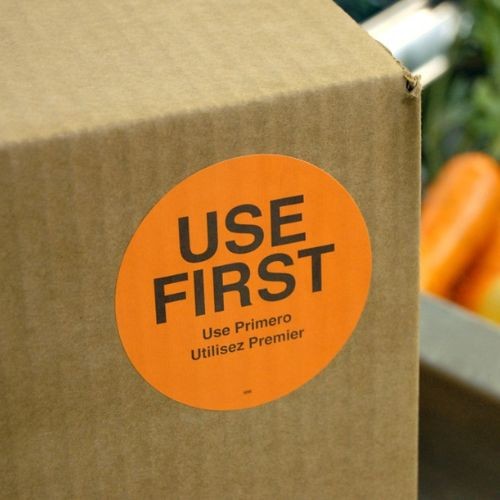
Labels and storage containers go hand in hand, and this duo is a smart match for preventing food spoilage in school kitchens. DayMark’s multilingual “Use First” Labels are highly visible and promote FIFO (First In, First Out) inventory practices across kitchen staff—all at an affordable price point. These labels also align with HACCP and best practices in school foodservice environments to ensure food is being properly handled.
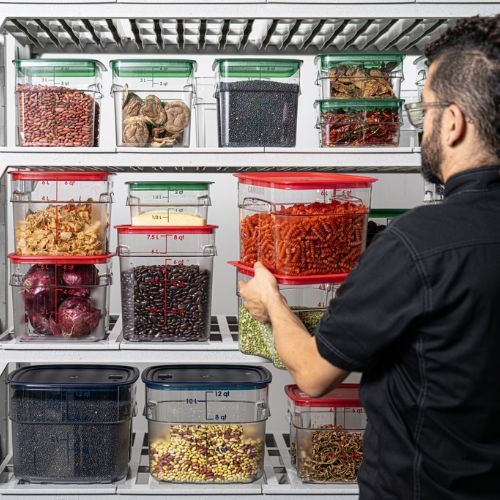
Cambro’s FreshPro containers feature color-coded lids for food safety, curved corners for easier pouring, and stackable design to save space. Optional drain shelves help extend the freshness of ingredients like fruits, vegetables, and meats.
Supporting Safe, Efficient K–12 Foodservice
Investing in the right preservation equipment and implementing smart practices can reduce food waste in school kitchens, streamline operations, and improve meal consistency. Need help finding the right solution for your kitchen? Our K–12 experts are ready to assist. Contact us today to discover the best options for your school.